Recipe
Gluten-Free Brownies Recipe
Ad links. We may earn a commission on purchases, at no extra cost to you.
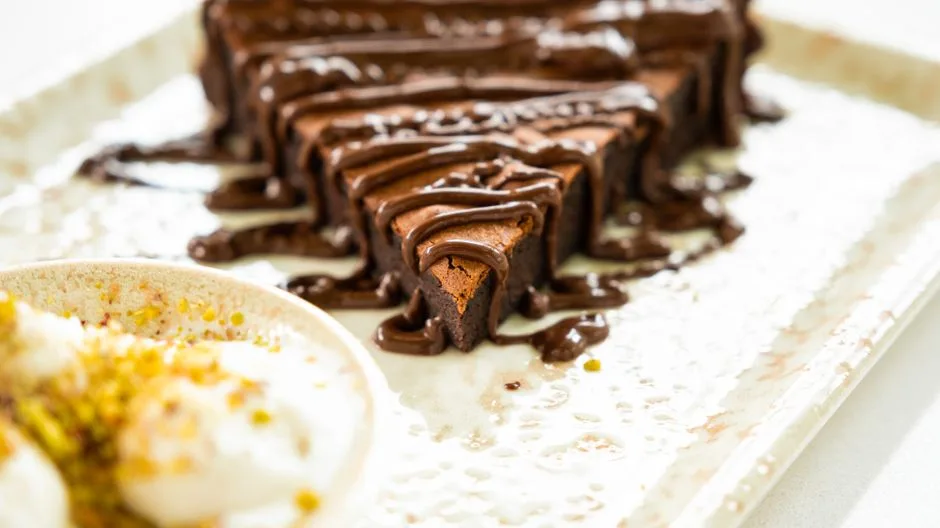
Great gluten-free brownies do not have to taste like a compromise. The trick is leaning into what makes brownies great in the first place: plenty of chocolate, enough fat for a fudgy crumb, and a short bake so the center stays moist. Because there is no gluten to develop, gluten-free batters actually favor the dense, fudgy style that most brownie lovers want anyway. A quality 1:1 gluten-free flour blend (the kind that already includes xanthan gum) does the structural work, while unsweetened cocoa and melted chocolate carry the flavor. This recipe comes together in one bowl, needs no mixer, and reheats beautifully.
Fudgy Gluten-Free Brownies
Ingredients
- 1/2 cup (113 g) unsalted butter
- 4 oz (113 g) semisweet or bittersweet chocolate, chopped
- 1 cup (200 g) granulated sugar
- 1/4 cup (50 g) packed light brown sugar
- 3 large eggs, room temperature
- 2 teaspoons pure vanilla extract
- 3/4 cup (105 g) 1:1 gluten-free all-purpose flour blend (with xanthan gum)
- 1/3 cup (30 g) unsweetened cocoa powder
- 1/2 teaspoon fine salt
- 1/2 cup (85 g) gluten-free chocolate chips (optional)
Instructions
- Heat the oven to 350F (175C). Line an 8x8-inch (20x20 cm) metal pan with parchment, leaving an overhang on two sides.
- In a large heatproof bowl, gently melt the butter and chopped chocolate together, either over a pan of simmering water or in short microwave bursts, stirring until smooth. Let cool 5 minutes.
- Whisk the granulated sugar and brown sugar into the warm chocolate. Add the eggs one at a time, whisking hard after each, then whisk in the vanilla. Beat about 1 minute until the batter looks glossy and slightly thickened.
- Sift in the gluten-free flour blend, cocoa powder, and salt. Fold with a spatula just until no dry streaks remain. Do not overmix. Fold in the chocolate chips if using.
- Scrape the batter into the pan and smooth the top. Bake 25 to 30 minutes, until the top is set and crackly and a toothpick in the center comes out with a few moist crumbs (not wet batter).
- Cool completely in the pan on a rack, at least 1 hour, before lifting out and cutting into 16 squares. For the cleanest edges, chill 30 minutes first and wipe the knife between cuts.
Tips for the best gluten-free brownies
- Use a 1:1 blend with xanthan gum, and do not add extra gum. Single-grain flours like rice or almond flour behave very differently and can turn out gritty or greasy, while adding more xanthan gum on top of an already-blended flour is a common cause of gummy texture. A cup-for-cup blend is the most reliable swap.
- Underbake slightly. Gluten-free crumbs firm up a lot as they cool. Pull the pan when the center still has a faint wobble and a toothpick shows moist crumbs.
- Weigh your flour. Gluten-free blends vary in density, and scooping can pack in 20 percent too much, giving dry, cakey results. A kitchen scale is the single biggest upgrade.
- Let the chocolate mixture cool before adding eggs, so you do not scramble them.
- Room-temperature eggs emulsify better and help create that signature shiny, crackly top.
- A metal pan gives crisper edges and more even baking than glass; if using glass, add 3 to 5 minutes and check early.
- Rest the batter 10 minutes before baking to let the starches hydrate, which reduces any gritty texture.
Which gluten-free flour is best for brownies?
A 1:1 (cup-for-cup) gluten-free all-purpose blend that already contains xanthan gum is the most reliable choice, because it is formulated to swap directly for wheat flour. Blends based on rice flour and starches work especially well in brownies. Do not add extra xanthan gum if your blend already contains it, and avoid substituting straight almond or coconut flour, as they absorb liquid very differently and will change the texture.
How do I know when they are done without overbaking?
Start checking at 25 minutes. The top should look set and dry with a light crackle, but the center should still feel soft. A toothpick inserted 1 inch from the edge should come out mostly clean, while one in the center shows a few moist crumbs. If it comes out with wet batter, give it 2 to 3 more minutes and check again.
Why are my gluten-free brownies gritty or dry?
Grittiness usually comes from rice-based flour that has not had time to hydrate; resting the batter 10 minutes and letting the baked brownies sit overnight both help. Dryness almost always means too much flour (measured by scooping instead of weighing) or overbaking. Weigh your flour and pull the pan a few minutes early.
Can I make these dairy-free too?
Yes. Swap the butter for a solid plant-based butter or refined coconut oil, and use dairy-free chocolate and chocolate chips. Milk used as an ingredient has to be declared wherever a pack carries an ingredient list, in both the EU and the US. The dairy-free line on the front is a separate, voluntary claim: neither region has set a limit behind it the way both have for gluten-free, and in the US the regulator expects a pack carrying that line to hold no milk from any source. It also says that line should not sit on the same pack as a warning that the food may contain milk, a pairing it still finds on shelves. The texture stays fudgy, though coconut oil can make the crumb slightly softer, so let them cool fully before cutting.
How should I store them and can I freeze them?
Keep brownies in an airtight container at room temperature for up to 4 days; they are often even fudgier on day two. To freeze, wrap individual squares and store up to 3 months, then thaw at room temperature or warm briefly in the microwave.
Labels and cross-contamination: a gluten-free statement on the packaging is a regulated claim, permitted in both the EU and the US only where the food holds no more than 20 mg of gluten per kilogram. A flour blend, cocoa, chocolate, chips, baking spray, or vanilla without that statement has no checked gluten level; it is unmeasured rather than disqualified. Oats and some chocolate are frequently processed on equipment shared with gluten-containing grains, which is why the label says something the ingredient list cannot: naturally gluten-free describes where a food comes from and carries no limit. Gluten travels the same way in a kitchen, through bowls, utensils, parchment, and pans that have held wheat flour, and through flour dust that settles on surfaces. This article is for general informational and educational purposes only and is not medical or dietary advice. What applies to you with celiac disease or a food allergy is a question for a doctor or dietitian.
Related guides