Recipe
GF Banana Bread Recipe: A Reliable Gluten-Free Loaf
This page contains affiliate links – if you buy through them we may earn a commission, at no extra cost to you. The recommendations are our own assessment. As an Amazon Associate we earn from qualifying purchases.
Gluten-free banana bread is one of the few gluten-free bakes that tends to work on the first attempt, because very ripe banana supplies much of the moisture and binding that gluten would otherwise provide. The short answer: mash about 350 g of very ripe banana, whisk it into melted butter, brown sugar, two eggs, yogurt and vanilla, then fold in 240 g of a gluten-free all-purpose blend with bicarbonate of soda, baking powder and salt. Let the batter rest for 20–30 minutes so the rice flours and starches hydrate, then bake in a lined 23 × 13 cm loaf tin at 175 °C for 55–65 minutes, until a skewer comes out with moist crumbs rather than wet batter. The full quantities and method are set out in the recipe below; the sections that follow explain the choices behind each step, so you can adapt the loaf to the flour blend and bananas you actually have.
Gluten-Free Banana Bread
Ingredients
- 350 g very ripe banana, peeled and mashed (about 3 medium bananas)
- 240 g gluten-free all-purpose flour blend (1:1 / cup-for-cup type)
- 1 tsp xanthan gum (omit if your blend already contains a gum)
- 1 tsp bicarbonate of soda
- 0.5 tsp baking powder
- 0.5 tsp fine salt
- 1 tsp ground cinnamon (optional)
- 115 g unsalted butter, melted and cooled
- 150 g light brown sugar
- 2 large eggs, at room temperature
- 60 g plain yogurt or sour cream
- 2 tsp vanilla extract
- 60 g walnuts, roughly chopped (optional)
Instructions
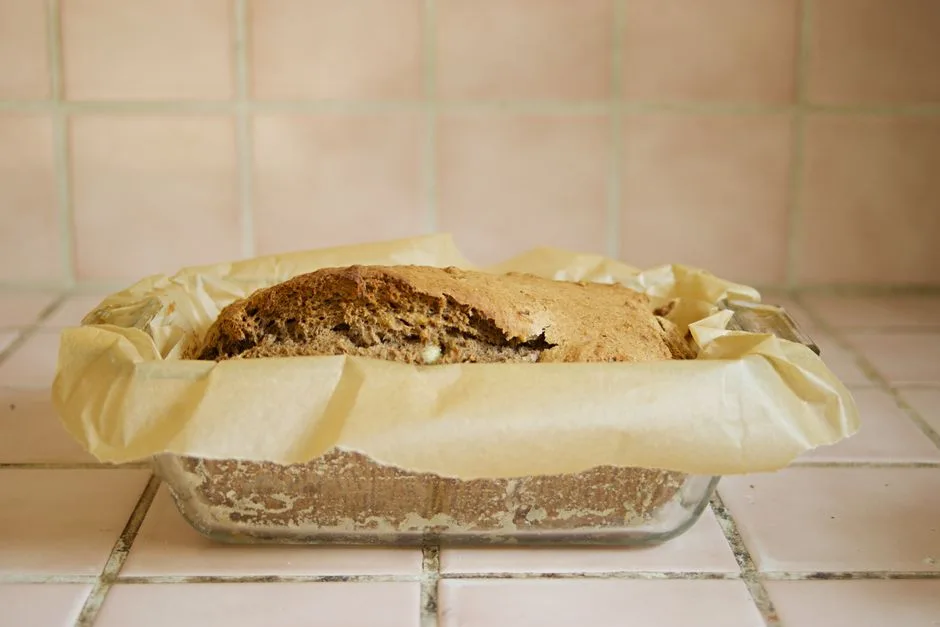
- Heat the oven to 175 °C (160 °C fan) and line a 23 × 13 cm loaf tin with parchment, leaving an overhang on the long sides.
- Whisk the flour blend, xanthan gum if using, bicarbonate of soda, baking powder, salt and cinnamon together in a bowl until evenly combined.
- Mash the bananas to a mostly smooth purée with a few small lumps and weigh out 350 g.
- In a large bowl, whisk the melted butter with the brown sugar, then whisk in the eggs one at a time, followed by the yogurt and vanilla.
- Stir the mashed banana into the wet mixture.
- Add the dry ingredients and stir until no dry streaks remain and the batter is uniform.
- Cover the bowl and let the batter rest at room temperature for 20–30 minutes so the flours hydrate; it will thicken.
- Scrape the batter into the tin, smooth the top and scatter over the walnuts if using.
- Bake for 55–65 minutes, tenting the top loosely with foil if it darkens before the 40-minute mark, until a skewer inserted in the centre comes out with moist crumbs but no wet batter.
- Cool in the tin for 15 minutes, lift out using the parchment, and cool completely on a wire rack before slicing.
Why banana bread is forgiving without gluten
In a wheat loaf, gluten forms an elastic network that traps gas and holds the crumb together. Quick breads never rely on that network heavily to begin with: they are chemically leavened, deliberately tender, and mixed as little as possible so the gluten does not develop. Removing wheat therefore takes away less than it would in a sandwich loaf or a baguette.
Banana does a surprising amount of structural work. The mashed pulp is thick with pectin and fibre, which holds water in place and keeps the crumb from collapsing as it cools. Eggs coagulate and set the structure, sugar keeps it soft, and fat coats the starch particles so the slice does not feel dry. That combination is why a well-made gluten-free banana bread is hard to tell apart from the wheat version, in a way that gluten-free bread rolls rarely are.
The trade-off is that gluten-free banana bread is much less tolerant of extra liquid. Wheat flour absorbs and holds a wide range of hydration; rice-based blends do not. Overripe bananas that have gone watery, or an extra half-banana thrown in because it was on the counter, are the single most common reason a loaf turns out gummy in the middle.
Choosing a gluten-free flour blend
A commercial cup-for-cup or 1:1 blend built on rice flour plus potato and tapioca starch is the most predictable choice for this loaf, and it is what the quantities below assume. These blends are designed to be swapped by weight into wheat recipes, and banana bread is close to the ideal case for them.
Single flours behave very differently and are not interchangeable one for one. Oat flour (labelled gluten-free) makes a soft, slightly sweet loaf but absorbs more liquid and can taste raw if underbaked. Almond flour brings fat and moisture but no starch, so a loaf made entirely from it stays dense and greasy. Buckwheat and sorghum give a good flavour but need starch alongside them. If you want to use one of these, our editorial view is to replace no more than a quarter of the blend by weight and leave the rest as a standard all-purpose mix.
Xanthan gum is the usual binder, and most retail blends already include it. Adding a second dose on top produces a slick, slightly rubbery crumb that people often describe as gluey. Read the ingredient list on the packet before adding any.
- Weigh the flour rather than scooping it — gluten-free blends vary a lot in density, and a heaped cup can be far more flour than intended.
- If your blend already lists xanthan gum, psyllium husk or guar gum, omit the extra gum in the ingredient list.
- Whole-grain blends absorb more liquid than white rice blends; if the batter looks stiff after resting, loosen it with a tablespoon of milk at a time.
- Blends containing bean flour can carry a savoury note that competes with banana.
How ripe the bananas should be, and how much to use
The bananas should be heavily speckled to almost fully black, soft enough that the peel slips off with no resistance. At that stage the starch has largely converted to sugar, which gives both the sweetness and the deep banana flavour. Yellow, firm bananas produce a pale loaf that tastes mostly of flour and sugar, and no amount of extra vanilla compensates.
Measure the banana by weight after peeling rather than by count, because banana size varies enormously. Roughly 350 g of mashed banana suits a standard 23 × 13 cm loaf tin with the flour quantity given. Going much above 400 g pushes the batter wetter than a rice-based blend can carry, and the centre sinks.
Frozen bananas work well and are often riper than anything you can buy. Thaw them fully in a sieve set over a bowl and let the loose liquid drain away, then mash the pulp. Tipping the drained liquid back in is the same mistake as adding an extra banana.
- Speed up ripening by baking whole unpeeled bananas at 150 °C until the skins blacken, then cooling them completely before use.
- Mash to a mostly smooth purée with a few small lumps; a completely liquid purée makes the crumb denser.
- If the mashed banana looks watery, drain it briefly in a sieve before weighing.
Mixing, and the rest that stops a gritty crumb
The order matters less here than in a wheat recipe, but keeping the dry ingredients whisked together separately does matter: bicarbonate of soda clumps easily, and an undissolved pocket of it leaves a soapy, metallic patch in the finished slice. Whisk the dry mix thoroughly before it meets anything wet.
You cannot overwork gluten that is not there, so a gluten-free banana bread batter can be stirred until it is genuinely uniform without turning tough. Stop once no dry streaks remain — beyond that you are only knocking air out of the leavening.
The rest is the step most recipes skip and the one that changes the texture most. Rice flour is milled coarser than wheat flour and takes time to absorb water. Leaving the finished batter to stand for 20–30 minutes at room temperature lets the particles hydrate, which removes the faint sandiness that gives cheap gluten-free bakes away. The batter will thicken visibly during the rest; that is expected, and it does not need to be thinned back.
Baking, doneness and cooling
Bake at 175 °C in a conventional oven, or around 160 °C with a fan, on a middle shelf. Gluten-free loaves brown faster than wheat ones because of the higher sugar and starch content, so if the top is dark by the 40-minute mark, lay a loose sheet of foil over it and carry on.
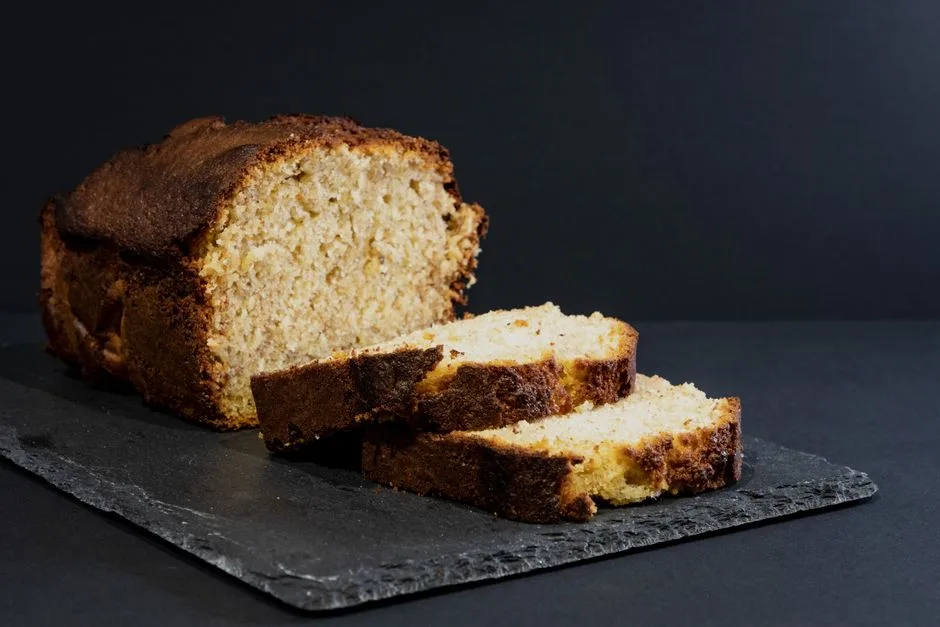
A skewer pushed into the centre should come out with a few moist crumbs clinging to it and no wet batter. If you have a probe thermometer, the centre of a finished quick bread sits at roughly 96–98 °C, which is a more reliable cue than colour when a loaf has a lot of banana in it. A crack running down the length of the top is normal and a sign the loaf rose properly.
Cooling is not optional. The crumb of a gluten-free loaf sets as starch gels firm up on cooling, and slicing while hot pulls the structure apart and leaves the centre looking underbaked when it is not. Let the loaf sit in the tin for about 15 minutes, lift it out on the parchment, then cool it completely on a wire rack before the first slice.
- Line the tin with a parchment sling so the loaf can be lifted out early — a hot tin keeps cooking the crust.
- Muffins from the same batter bake in roughly 20–25 minutes at the same temperature.
- Open the oven as little as possible during the first two-thirds of the bake.
Dairy-free, egg-free and add-ins
For a dairy-free loaf, swap the butter for the same weight of a neutral oil or melted refined coconut oil, and use an unsweetened plant yogurt in place of the dairy yogurt. Oil gives a slightly moister, softer crumb than butter and a plainer flavour.
Eggs are harder to replace here, because they are doing structural work rather than just adding moisture. Two flax eggs (2 tablespoons ground flaxseed whisked with 6 tablespoons water and left to gel for 10 minutes) will hold the loaf together, but expect a denser, damper result and add five to ten minutes to the bake. Aquafaba and commercial egg replacers behave similarly.
Add-ins should be folded in at the very end and kept to about 100–150 g in total, or they weigh the batter down. Toasted walnuts or pecans, dark chocolate chunks, a spoon of cinnamon, or the finely grated zest of an orange all suit the base. Tossing chocolate chips in a teaspoon of the flour blend before folding helps keep them from sinking.
- Reducing the sugar much below the amount given makes the loaf noticeably drier — gluten-free crumbs rely on sugar to hold water.
- Sour cream, thick yogurt or buttermilk all work in the same quantity.
- Skip the nuts entirely if you are baking for a nut-free household; nothing else needs adjusting.
Storing, freezing and fixing common problems
Once fully cool, wrap the loaf tightly and keep it at room temperature; it is at its best over the first two or three days and stays good longer than a wheat loaf because of the banana. Refrigeration accelerates staling in gluten-free bakes and is worth avoiding unless the kitchen is very warm.
For longer keeping, slice the cooled loaf, layer the slices with parchment, and freeze them in a sealed bag. Individual slices thaw quickly at room temperature or toast straight from frozen, which also refreshes the texture.
Most failures trace back to three things: too much banana, an under-hydrated batter, or slicing too early. Working through those in order solves nearly every gummy, sandy or crumbling loaf.
- Gummy, dense band along the bottom: too much banana or liquid, or the loaf came out of the oven before the centre reached temperature.
- Gritty or sandy mouthfeel: the batter was not rested long enough for the rice flour to hydrate.
- Crumbles when sliced: not enough binder, or the loaf was cut while still warm.
- Sunken centre: oven door opened early, or too much leavening for the amount of batter.
- Soapy or metallic aftertaste: bicarbonate of soda not whisked evenly through the dry ingredients.
Frequently Asked Questions
Do I need xanthan gum in gluten-free banana bread?
Usually not as a separate addition, because most retail 1:1 blends already contain xanthan or another gum. Check the packet: if a gum is listed, leave the extra teaspoon out, since a double dose makes the crumb slick and rubbery. If you are mixing your own blend from plain rice flour and starches with no binder, the teaspoon of xanthan gum helps hold the slice together.
Why is my gluten-free banana bread gummy in the middle?
Most often there was too much banana or other liquid for the flour to carry, or the loaf came out of the oven slightly early. Weigh the mashed banana instead of counting fruit, drain thawed frozen bananas before mashing, and bake until a skewer shows moist crumbs rather than batter. Slicing while the loaf is still warm produces the same appearance even when it is fully baked, because the starches have not finished setting.
Can I make this with only almond flour or only oat flour?
Not with these quantities. Almond flour has no starch to set the crumb, so an all-almond loaf stays dense and oily, and oat flour labelled gluten-free absorbs liquid differently and needs its own formulation. Both work well as part of a blend — replacing up to about a quarter of the flour by weight — with a standard all-purpose gluten-free mix making up the rest.
Can I turn this batter into muffins?
Yes. Divide the rested batter between about 12 lined muffin cups, filling each roughly three-quarters full, and bake at the same 175 °C for around 20–25 minutes, until a skewer comes out clean of wet batter. Let them cool in the tin for a few minutes before moving them to a rack, since the structure is fragile while hot.
How long does the loaf keep, and can I freeze it?
Wrapped tightly at room temperature once fully cool, it is at its best over the first two to three days. Refrigeration tends to make gluten-free bakes stale faster, so skip it unless the kitchen is very warm. For longer storage, slice the cooled loaf, layer the slices with parchment and freeze them in a sealed bag — they thaw at room temperature in a short time or can be toasted straight from frozen.
Related guides